

Oral GLP-1 pill vs injection: what to know when choosing your weight management medication

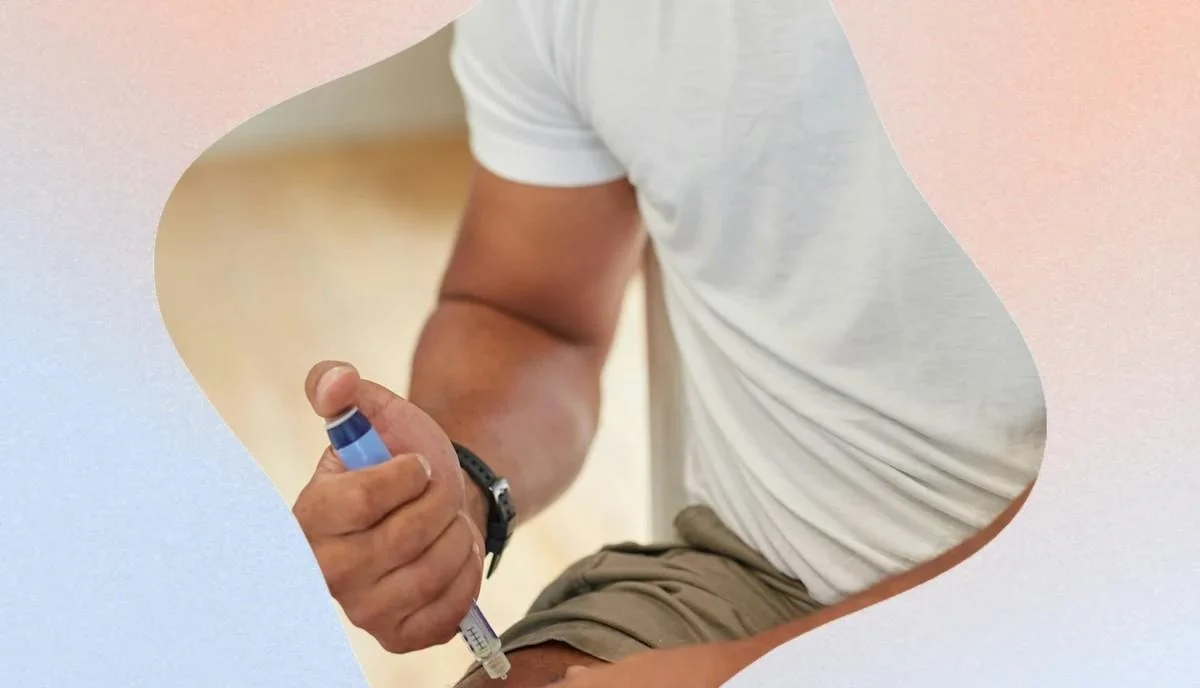
Maybe your medical provider mentioned GLP-1 medication for weight management. Then you learned it meant a weekly injection, and you paused. If the needle has you thinking twice if this treatment is for you, you’re not alone.
Another option is the oral GLP-1 pill, a tablet form of semaglutide for weight management, taken once daily instead of the once-weekly injection. Researchers published the tablet’s approval trial in the New England Journal of Medicine. Participants taking the oral form lost 13.6% of their body weight over 64 weeks, against 2.2% on a placebo.
Both forms of this medication carry the same active medicine and work the same way, by reducing appetite and increasing the feeling of fullness. The differences are how you take the dose, how often you take it, and how you store the medication.
At Circle Medical, we handle weight management through video visits. We can connect you with a board-certified provider to talk through online oral GLP-1 treatment when it’s clinically appropriate.
Key facts about the oral GLP-1 pill
| Active medicine | Semaglutide, a GLP-1 receptor agonist, the same medicine used in the weekly injection |
|---|---|
| Dosing | One tablet by mouth, once a day |
| How it’s taken | First thing in the morning on an empty stomach, with up to 4 ounces of water, then a 30-minute wait before food, other beverages or other oral medications |
| Who it’s for | Adults with a BMI of 30 or higher, or 27 or higher with a weight-related condition such as high blood pressure or sleep apnea |
| FDA status | Approved in December 2025 for chronic weight management in adults |
What separates the daily GLP-1 tablet from the weekly shot
Four things separate the daily tablet from the weekly shot: dosing frequency, how you take it, storage, and travel. The medicine inside each form is the same.
Every dimension in the comparison below comes from the FDA prescribing information or the published trials.
| Dimension | Oral tablet | Weekly injection |
|---|---|---|
| Dosing frequency | Once daily | Once weekly, on the same day each week |
| How it’s taken | Swallowed whole, in the morning, on an empty stomach | Injected under the skin of the abdomen, thigh or upper arm |
| Timing rules | Up to 4 ounces of plain water, then nothing to eat or drink for 30 minutes | Any time of day, with or without meals |
| Dose adjustment | Increased in steps over several weeks under provider supervision | Increased in steps over several weeks under provider supervision |
| Storage | Room temperature, 68°F to 77°F, in the original container | Refrigerated at 36°F to 46°F before first use, with a limited window at room temperature |
| Travel | No cooling needed | Cooling needed once the room-temperature window runs out |
| Trial weight change | 13.6% at 64 weeks vs 2.2% on placebo (OASIS 4, n=307) | 14.9% at 68 weeks vs 2.4% on placebo (STEP 1, n=1,961) |
| Common side effects | Gastrointestinal, nausea most often | Gastrointestinal, nausea most often |
The differences you’ll notice day to day
The oral GLP-1 tablet asks you to take the pill and wait for 30 minutes before ingesting any food or liquid. The injection requires you to use a needle once a week and store the medication in your refrigerator.
The way you travel with this medication also differs. The tablets go in a bag with no cooling required. The injection pens have a limited window of effectiveness at room temperature before they need to go back in the fridge.
The medicine works the same way once it’s inside you.
What stays the same in both forms
Both forms of medication are indicated for adults with a BMI of 30 or higher, or 27 or higher with a weight-related condition such as high blood pressure or sleep apnea. Both carry the same boxed warning about thyroid C-cell tumors seen in rodents.
Both are contraindicated if you have a personal or family history of medullary thyroid carcinoma. Those warnings apply because the active medicine is identical. That same medicine works on your appetite and digestion in the same way no matter which form you choose.
What semaglutide does to appetite and digestion
The active medicine is the same in both forms, and it works on two systems at once: appetite and digestion. The digestion part explains why the tablet’s timing rules are so specific.
How semaglutide changes hunger and fullness
Semaglutide binds to and activates the GLP-1 receptor. The FDA label describes this receptor as a physiological regulator of appetite and caloric intake. These receptors sit in your brain areas that control your appetite.
Most people on this medication notice they’re less interested in food between meals. Slower digestion extends that effect. Together they can reduce how much you eat without trying to restrict your diet.
How digestion changes the way the tablet is absorbed
Semaglutide also slows how quickly your stomach empties. That extends the feeling of fullness after a meal. But it also creates the food absorption problem that the tablet has to solve.
Peptides like semaglutide normally break down in the digestive tract before they can be absorbed. The tablet includes an absorption enhancer called SNAC. Most absorption happens in the stomach itself.
Food and other liquids can interfere with that absorption. The 30-minute wait gives the medicine a clear stomach to cross. That window shapes the first half hour of your day.
What a morning on oral semaglutide looks like
The FDA label sets out four rules for taking the oral GLP-1 pill. These four rules have to be followed daily.
- Take the tablet in the morning on an empty stomach.
- Use plain water, up to 4 ounces, and nothing else.
- Swallow the pill whole without splitting, crushing, chewing or dissolving it.
- Wait at least 30 minutes before eating, drinking anything else, or taking other oral medications.
The injection form of this medication doesn’t change your morning routine. It goes on the same day each week, at any time of day, with or without meals. You should inject the medication into your abdomen, thigh, or upper arm.
Where the tablet collides with the rest of your morning
Coffee counts as a beverage. So does the water you use to swallow another medication. Thyroid medication has its own empty-stomach timing rules, which can land on the same half hour you intend to take the oral GLP-1 pill.
Some people get used to the 30-minute wait within a week. Others find that it clashes with their breakfast routine every morning.
How consistently you hold the 30-minute window affects how much medicine you absorb. That absorption window is what your medication needs to maintain effectiveness.

Is the oral GLP-1 pill as effective as the injection?
Once you know how to take the GLP-1 pill, the next question is whether it works. The two forms of medication produced similar weight loss in their own trials.
No study has compared them head to head. That is the most the current evidence supports.
What the tablet’s trial found
In the OASIS 4 trial, 307 adults with overweight or obesity and no diabetes were randomized to the oral form or placebo. Participants on the pill experienced mean weight change at 64 weeks at 13.6%, while participants on the placebo only experienced 2.2% weight change within the same time period.
Among participants who stayed on treatment as planned, mean weight loss reached 16.6%.
What the injection’s trial found
The injection’s benchmark comes from STEP 1, a much larger trial. Across 1,961 adults over 68 weeks, mean weight change was 14.9% with the injection, against 2.4% on placebo.
Why the two numbers can’t be compared
The injection trial (STEP 1) ran four weeks longer than the trial for the pill (OASIS 4). It enrolled more than six times as many people. Those design differences mean you can’t compare the two results side by side.
Both trials show that the tablet produced weight loss in the same broad range as the injection.
Side effects of the oral GLP-1 pill
Effectiveness of the medication matters, but so does tolerability. Here is what the trials reported about side effects.
Gastrointestinal effects are the most commonly reported side effects of the oral GLP-1 pill. Nausea leads the list.
In OASIS 4, 74% of participants on the tablet reported gastrointestinal effects, against 42% on placebo. Most were mild to moderate and temporary. Discontinuation because of side effects was uncommon, at 7% with the tablet and 6% with placebo.
The FDA label lists nausea, diarrhea, vomiting, constipation and abdominal pain among the most frequent reactions for both forms. Side effects seem similar regardless of the form of the medication, so the tablet probably won’t spare you. With tolerability close to even, the choice comes down to which routine fits your life.
How to choose between the oral pill and the weekly injection
If side effects are similar, how do you pick which form of medication works for you? The answer lies in your daily routine and which form of medication you can keep for a year or longer. An expensive mistake people make is choosing the form that sounds easier, then abandoning it two months in because it doesn’t fit their day.
Work through these five questions before your appointment:
-
How do you feel about needles? Needle aversion keeps some people away from injectable treatment entirely. If that’s you, say so plainly at the visit.
-
What happens in the first 30 minutes after you wake up? Coffee, breakfast and morning medications all conflict with the tablet’s absorption window. If your mornings are crowded, the weekly injection may fit your life better.
-
How often do you travel or change time zones? Tablets need no cooling. Injection pens do, once they’re past their allowed time out of the fridge.
-
Do you take other oral medications in the morning? Thyroid medication has its own empty-stomach timing rules, which can collide with the tablet’s.
-
Would a weekly task or a daily one be easier to remember? Some people forget a daily pill and never miss a Sunday injection.
Cost and insurance coverage for the oral GLP-1 pill
Coverage for weight management medications varies widely by plan. A medication approved as recently as December 2025 may not yet sit on every formulary.
KFF has estimated that 42% of privately insured adults under 65 could meet the clinical criteria for a GLP-1 medication. Only about 3% of adults with employer coverage had a prescription as of 2022.
Circle Medical is in network with many PPO insurance plans. Patients with accepted coverage pay $35 on average per appointment. Self-pay appointments are $120. We can’t accept Medicaid or Medi-Cal, but rest assured that you won’t be charged until after your appointment, and there are no memberships or hidden fees.
Disclaimer: The amounts above apply to Circle Medical appointments, not to medication costs. Insurance coverage for your visits does not guarantee that your plan will cover the prescribed medication. Formulary status and out-of-pocket costs vary by plan.
Questions people often ask about the oral GLP-1 pill
Who is the oral GLP-1 pill approved for?
The tablet is FDA-approved for adults with obesity, defined as a BMI of 30 or higher. It’s also approved at a BMI of 27 or higher when at least one weight-related condition is present. Common qualifying conditions include high blood pressure, type 2 diabetes and obstructive sleep apnea.
The label carries an additional indication related to reducing cardiovascular risk. A provider can assess whether you meet the criteria.
Is the oral GLP-1 pill available now?
Yes. The tablet was approved in December 2025 and reached US pharmacies in early 2026. Availability can still vary by pharmacy and by region.
Supply for weight management medications has been uneven in recent years. If your pharmacy doesn’t stock it, ask your provider about transferring the prescription rather than waiting. A provider can also tell you whether your plan has added it to its formulary yet.
Does the pill have fewer side effects than the injection?
There’s no good evidence that it does. Both forms deliver the same medicine, and gastrointestinal effects are the most commonly reported reactions for each. Nausea is the most frequent.
In the tablet’s approval trial, 74% of participants reported gastrointestinal effects, mostly mild to moderate and temporary. If nausea has stopped you before, that’s a conversation to have with a provider rather than a reason to assume the tablet will be gentler.
Is the weight management pill the same as the oral semaglutide approved for diabetes?
No, and the two are commonly confused. An oral semaglutide tablet was approved earlier for type 2 diabetes as an adjunct to diet and exercise. That product has a different indication, a different dosing range and different labeling.
The weight management tablet approved in December 2025 is a separate product. Treating them as interchangeable can lead to a prescribing or coverage error, so name the indication you’re asking about at your appointment.
Can you switch from the injection to the pill?
Switching between forms can be done with provider guidance. It isn’t something to arrange on your own. The two forms use different dosing scales.
A provider needs to set your starting point and monitor how well you tolerate it. If you’re considering a switch, bring your current prescription details to the visit.
How much does the oral GLP-1 pill cost without insurance?
Retail pricing for weight management medications changes often, and it varies by pharmacy, manufacturer program and state. We don’t quote medication prices, because any figure would likely be out of date within a month.
We can tell you the visit cost. Circle Medical appointments are $120 for self-pay patients, and $35 on average with accepted insurance.
How long do you stay on a GLP-1 medication?
Obesity is generally treated as a chronic condition, and GLP-1 medications are typically prescribed with that in mind. In published semaglutide studies, participants who stopped treatment tended to regain part of the weight they had lost.
No fixed endpoint is written into the label. Your provider can reassess at follow-up visits based on your response, how well you tolerate it, and your other health conditions.
Who can prescribe the oral GLP-1 pill?
An appropriately licensed healthcare professional, including a primary care provider, may prescribe oral semaglutide when clinically appropriate. Additional evaluation or specialist referral may be recommended based on your medical history. GLP-1 medications are prescribed on clinical criteria.
A provider will review your BMI, your weight-related conditions and your history before deciding whether treatment is appropriate. At Circle Medical, that review happens in a video visit with a board-certified primary care provider.
Talk to a provider about oral GLP-1 treatment
Based on its efficacy and side effects, the two forms of GLP-1 medication are close enough. One doesn’t clearly beat the other. The more useful question is which routine you’ll be able to keep a year from now.
If you’re on GLP-1 medication and experience severe or persistent abdominal pain, or vomiting that keeps you from holding down fluids, contact a medical provider immediately. Seek emergency care for swelling of the face or throat, or trouble breathing. Severe abdominal pain that radiates to the back can be a sign of pancreatitis and needs urgent evaluation.
Circle Medical has 300+ board-certified providers and is in network with many PPO insurance plans. Video appointments are available in 32 states. Talk to a Circle Medical provider today about your symptoms and treatment options. You can also start with online oral GLP-1 treatment from board-certified providers.


Talk to a provider about your health today
In network with most insurance plans
No memberships or hidden fees
Pay only after your appointment