

Why Women's Mental Health Symptoms Get Dismissed (and What to Do Next)


TL;DR: Key facts about women’s mental health
- Nearly 1 in 4 U.S. women experience a mental health condition each year, and women experience depression and anxiety at higher rates than men.
- Mental health symptoms in women are sometimes attributed to “stress” or “hormones” before a full evaluation takes place.
- Life stages such as adolescence, pregnancy, postpartum, and perimenopause can increase mood vulnerability, but persistent symptoms are not explained by hormones alone.
- Symptoms that last two weeks or longer, disrupt daily life, or include hopelessness or suicidal thoughts warrant structured evaluation.
- Primary care can be a practical starting point for mental health screening, support, and next-step planning.
Women face higher mental health risk and unique barriers to evaluation
You finally say it out loud: the exhaustion feels heavier than “just being busy.” The anxiety doesn’t ease. The low mood lingers. When you bring it up, you may hear, “It’s probably stress,” or “It’s probably hormones.”
Women experience depression and anxiety at higher rates than men, but many women run into a familiar barrier: symptoms get explained away before anyone takes a full look. Nearly 1 in 4 U.S. women experience a mental health condition each year, compared with about 1 in 5 men. Women are also significantly more likely than men to experience major depressive episodes and anxiety disorders. When risk is higher, careful, evidence-based evaluation matters.
Research shows women have higher rates of depression and anxiety
Large national surveys confirm the pattern. Women also experience higher rates of anxiety disorders across the lifespan.
These differences can show up in everyday life, including energy, sleep, focus, relationships, and the ability to get through a normal day. Globally, more than one billion people live with mental health conditions, and services require urgent scale-up.
When mental health symptoms are attributed to “stress” or “hormones”
When symptoms are quickly labeled as “stress” or “hormones,” women may not receive a full mental health evaluation.
When emotional or physical symptoms get attributed to stress or hormonal changes without structured screening, the visit can end without a clear plan. The explanation may sound reasonable, but important details can be missed.
Cultural assumptions can influence clinical encounters
Cultural assumptions can shape healthcare conversations.
- Emotional distress in women may be described as “mood-related.”
- Irritability in men may be framed as behavioral.
- Insomnia, fatigue, or concentration problems may be attributed to life stress instead of being evaluated as possible signs of depression or anxiety.
Higher diagnosis rates do not automatically mean overdiagnosis. Bias can also show up as symptoms being minimized, questions not being asked, or conclusions being drawn too quickly.
Depression is not the only condition that affects women disproportionately
Depression is not the only mental health condition that affects women at higher rates. Perinatal disorders, trauma-related conditions, and eating disorders also show clear gender differences.
Perinatal mood and anxiety disorders affect many women
Pregnancy and the postpartum period can significantly increase vulnerability to depression and anxiety. Depression can occur during pregnancy and the postpartum period, and this time is recognized as a period of increased vulnerability to mood disorders. Hormonal shifts, sleep disruption, and the demands of caring for a new baby can compound existing stress and increase risk.
PTSD risk increases after interpersonal trauma
Women are more likely to develop post-traumatic stress disorder after experiences such as sexual trauma or intimate partner violence, in part because exposure patterns differ.
Eating disorders occur more frequently in women
Eating disorders affect women at higher rates than men and can co-occur with anxiety and depression, which is one reason a broader, whole-person evaluation matters.
Life stage hormonal shifts can affect emotional health
Life stage hormonal shifts can affect emotional health, but hormones alone do not explain persistent or worsening symptoms.
| Life Stage | What Changes | How Emotional Health Can Be Affected | When to Consider Clinical Evaluation |
|---|---|---|---|
| Puberty | Rapid hormonal shifts combined with social and developmental changes | Depression rates increase for girls during adolescence, with significantly higher prevalence in adolescent females compared with males. | Mood symptoms that last two weeks or longer, interfere with school or relationships, or include hopelessness deserve structured evaluation. |
| Pregnancy & Postpartum | Fluctuating hormones, sleep disruption, caregiving demands | Vulnerability to depression and anxiety increases. Perinatal depression affects about 1 in 5 women. | Symptoms that persist beyond expected adjustment, disrupt bonding or daily functioning, or include intrusive or self-harm thoughts require professional assessment. |
| Perimenopause | Changing and fluctuating estrogen levels | Mood regulation can shift during the menopause transition, and some women experience new or worsening depressive symptoms during this time. | Emotional changes that are constant rather than cyclical, worsen over time, or impair work and relationships should prompt evaluation. |
| Menstrual Cycle (Cyclical Changes) | Monthly hormonal fluctuations | Mood changes may follow a predictable pattern and improve as the cycle shifts. Symptoms are often time-limited rather than constant. | Depression or anxiety that persists outside cyclical patterns, lasts at least two weeks, disrupts sleep, appetite, concentration, or daily functioning, or includes hopelessness or suicidal thoughts reflects a clinical condition that warrants care. |
Hormonal shifts can influence mood. When symptoms persist, worsen, or interfere with daily life, those symptoms deserve careful, evidence-based evaluation.
What to do if your mental health symptoms are dismissed
If your concerns are dismissed, you can take clear, practical steps to ensure your symptoms are fully evaluated.
Document your symptoms clearly
Writing down what you are experiencing can shift a vague conversation into a focused clinical discussion. Consider noting:
- How long symptoms have been present (days, weeks, or months)
- Changes in sleep (difficulty falling asleep, waking early, sleeping more than usual)
- Appetite or weight changes
- Difficulty concentrating, racing thoughts, or persistent fatigue
- Any thoughts of self-harm or safety concerns
Specific details make it easier for a clinician to see patterns and assess severity.
Ask about standardized screening tools
Screening tools provide structure and objectivity. You can ask whether your visit will include:
- PHQ-9 for depression
- GAD-7 for anxiety
- EPDS for postpartum depression
These tools create a shared language for symptoms and help guide next steps.
Know when further evaluation is important
Comprehensive evaluation is especially important when symptoms:
- last longer than two weeks,
- interfere with work, relationships, or daily responsibilities, or
- include hopelessness or suicidal thoughts.
Primary care is often a natural place to start this conversation. Many women first bring up mental health concerns during a routine visit, where a clinician can connect physical and emotional symptoms, rule out medical contributors such as thyroid conditions or anemia, and discuss treatment options.
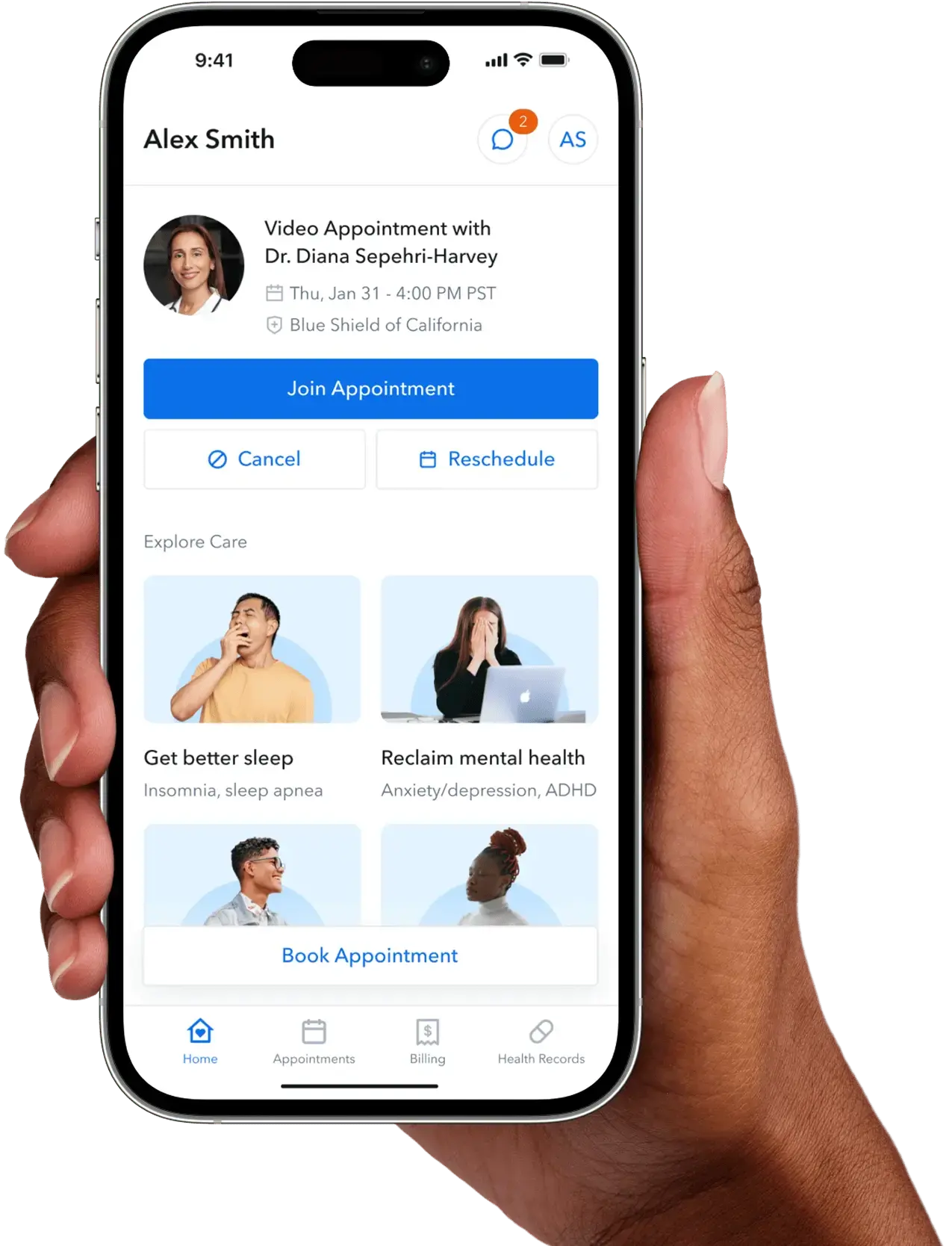
Circle Medical clinicians provide structured mental health evaluations through virtual primary care appointments, combining standardized screening with detailed history-taking. Services are covered by many major payers, which can make getting started feel more accessible.
Women’s mental health: key questions and clear answers
Why are women more likely to experience depression?
Research suggests risk is shaped by a mix of biological sensitivity to hormonal shifts and higher exposure to certain social stressors. This pattern is not a personal failing. It shows up consistently across large population studies.
How can you tell if mood swings are hormonal or depression?
Cyclical mood changes tend to follow a predictable pattern and improve as hormones shift. Depression is more likely when symptoms last two weeks or longer, feel constant rather than cyclical, and begin to interfere with sleep, work, relationships, or daily responsibilities.
When should you seek professional help for anxiety?
Seek evaluation when anxiety feels persistent, escalates over time, disrupts sleep, affects concentration, or limits daily activities. You do not need to wait until symptoms feel severe to ask for support.
Can perimenopause contribute to depression?
Yes. Hormonal fluctuations during perimenopause are associated with increased depression risk. Ongoing or worsening symptoms during this life stage deserve structured evaluation rather than being attributed to hormones alone.
You deserve clarity about your mental health symptoms
Women experience higher rates of depression, anxiety, and trauma-related disorders, and pregnancy and postpartum are recognized as times of increased mood vulnerability. Hormonal shifts can influence mood, but persistent emotional distress deserves thoughtful evaluation.
Seeking evaluation is not overreacting. It is a practical, evidence-based step toward feeling better.
If mood changes or anxiety are affecting daily life, talk to a Circle Medical provider about next steps.


Talk to a provider about your health today
In-network with most insurance plans
No memberships or hidden fees
Pay only after your appointment